If you want a reputation management in 2026, start with the basics you can control: monitor mentions in real time, answer every review within 24 hours, and fix NAP inconsistencies before they cost you trust. Audit your Google Business Profile weekly, use SMS to request reviews, and post videos that show your product and process. Layer in SEO content, local partnerships, and crisis protocols. Here’s how to make each step work together…
Real-Time Brand Mention Monitoring Across Platforms
Speed is your moat in reputation management, and real-time brand mention monitoring lets you see—and act on—conversations the moment they surface. Real-time monitoring also enables crisis management by detecting negative comments early so teams can respond before issues escalate.
You’ll track Facebook, Instagram, Reddit, YouTube, and LinkedIn while scanning news sites, blogs, forums, and UGC through real-time crawlers. Tools like Awario and Social Champ expand coverage to more platforms with unified analytics, so your team rallies around one source of truth.
Set alerts that trigger within minutes via email or dashboard. Use keywords, Boolean logic, domains, geography, and urgency detection to sort praise, criticism, and product inquiries. Brand monitoring should also include non-social channels, not just social media, to capture a complete picture of perception.
Layer in sentiment analysis (85%+ accuracy) to gauge tone, monitor share of voice against competitors, and watch 7/30/90-day shifts. Track top emojis and phrases to understand how your community feels.
Keep costs friendly: Awario from $29/month, Social Champ from $35/month, Mention’s Solo plan at $41/month, and Google Alerts as a free baseline. Ahrefs Alerts adds web-scale coverage and backlink notifications.
Responding to Every Review Within 24 Hours
Timely review responses aren’t just good etiquette—they’re central to effective business reputation management. Customers expect quick, meaningful acknowledgment, and search engines reward it with improved visibility and credibility. Setting a 24-hour response standard helps maintain trust, prevent sentiment decline, and demonstrate that your business values feedback.
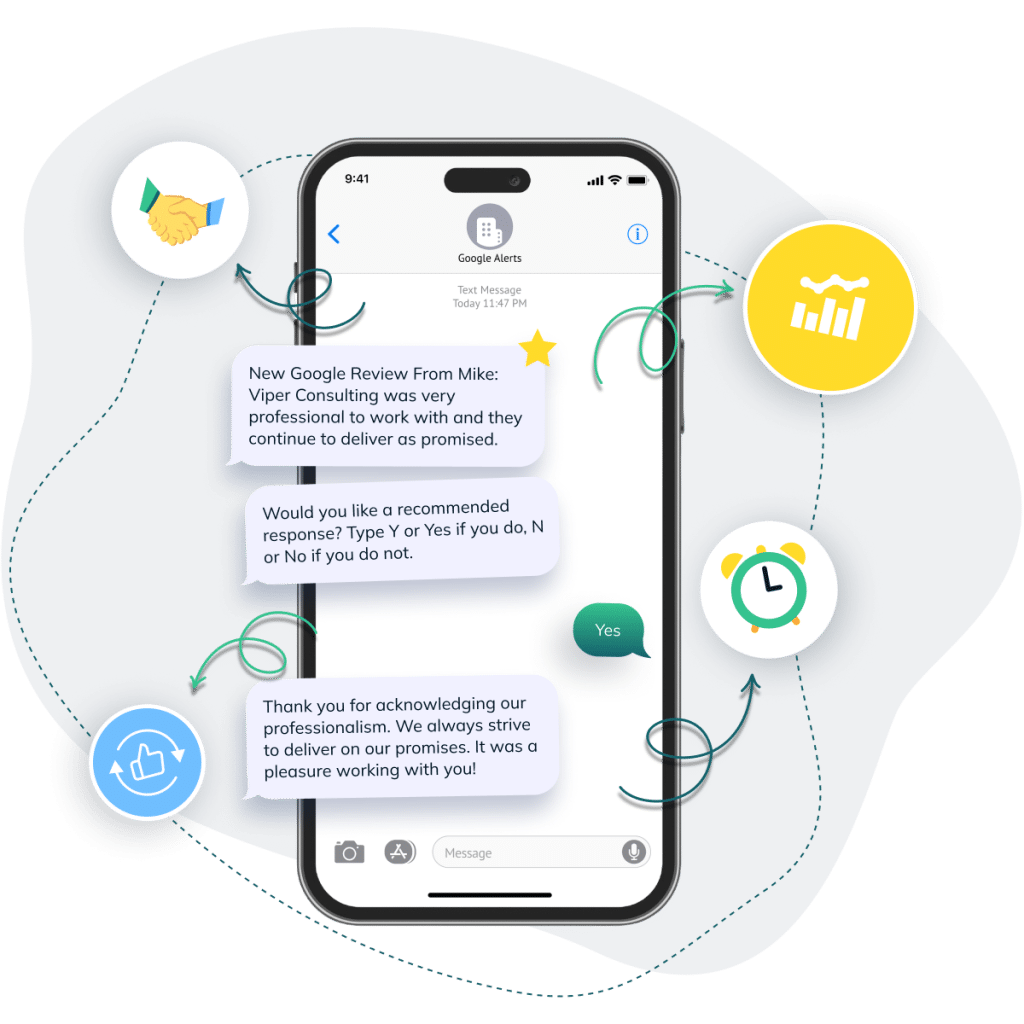
Platforms like Reviewly.ai make this goal realistic by automatically flagging new Google reviews in real time and enabling teams to reply using AI-assisted responses that match your brand’s tone. The system ensures no review slips through unnoticed, helping businesses sustain a consistent, empathetic presence across every location.
24-Hour Response Standard
Although you can’t control every comment, you can control your clock: respond to every review within 24 hours.
Customers expect it—76% want replies within a day, and 39–43% reward under-three-hour turnarounds. When you reply quickly, you show you care about community, not just commerce. Quick responses improve overall customer satisfaction because customers expect immediate responses.
Speed protects your reputation and fuels growth. Reviews influence 93% of buying decisions. Fast responders convert more—up to 391% higher than second responders—and prevent negative sentiment from snowballing.
Leads engaged within five minutes are nine times more likely to convert, and slow replies hand wins to competitors.
Make the 24-hour standard doable. Use AI monitoring to flag new reviews, route them via automated distribution, and track every touchpoint in an omnichannel CRM.
Set clear escalation protocols so nothing slips.
Tone and Template Guidelines
You’ve committed to the 24-hour reply rule; now make every response sound on-brand and effortless. Since the available guidance skews toward SBA compliance—not customer reviews—you’ll create your own tone rules and templates. Keep it warm, respectful, and specific. Automation makes speed possible, but tone builds trust. Every reply should feel human—warm, respectful, and specific. AI-generated drafts from Reviewly.ai can help maintain consistency and tone while allowing teams to personalize responses before posting.
Use short sentences, people-first language, and inclusive “we” and “you.” Mirror the customer’s key concern, state your value, and invite a next step. Build three micro-templates: praise, mixed feedback, and frustration. Standardize sign-offs and brand phrases so your team sounds like one welcoming voice. As you build these templates, remember the CFPB recently extended compliance deadlines, so align internal review-response workflows with updated dates to stay consistent across your locations.
Cue
Example
Greeting
“Hi [Name]—thanks for being here.”
Gratitude
“We appreciate you sharing this.”
Acknowledge
“We hear your concern about [issue].”
Remedy/Value
“Here’s what we can do today: [action].”
Close
“We’re here for you—[contact/link].”
Escalation and Resolution Steps
When a review arrives, respond within 24 hours to acknowledge and triage it. If it’s positive, thank the customer publicly. If it raises concerns, reply quickly and route it to the appropriate person for resolution. Automation tools like Reviewly.ai help trigger real-time alerts, assign tasks, and track outcomes—all from one centralized dashboard.
Even when resolution takes longer, an initial acknowledgment within 10 minutes shows accountability. Close the loop publicly once the issue is resolved to demonstrate transparency. This fast, structured approach keeps customer satisfaction high and reinforces a reputation for reliability and responsiveness—key pillars of long-term business trust.
Standardizing NAP Data to Eliminate Listing Errors
To eliminate listing errors, start with a strict NAP Consistency Checklist that locks in your exact business name, address, suite format, directional abbreviations, and phone formatting. Incorporate a focus on review signals to strengthen local relevance, as keywords and consistency in reviews can further improve visibility across search.
Track changes with logs and verification checks so every directory reflects the same data. Add clear data ownership by assigning a steward to oversee NAP standards, ensuring accountability and consistent enforcement across all listings.
NAP Consistency Checklist
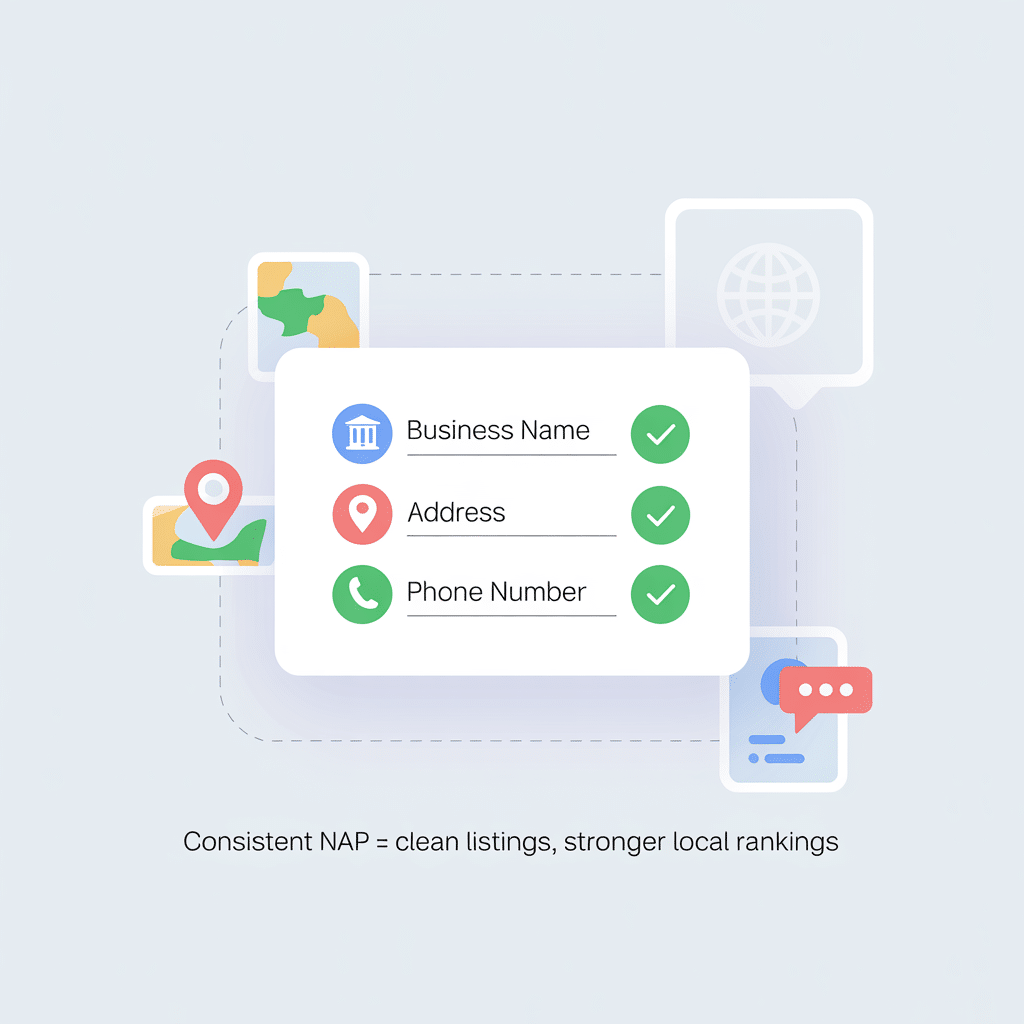
Start with a clear NAP consistency checklist that standardizes your business name, address, and phone across every listing to prevent search confusion and lost visibility. Consistent NAP information strengthens credibility with search engines and customers, directly influencing local rankings.
Choose one official name format (with or without Inc./LLC) and one phone style, then apply them everywhere.
Make your Google Business Profile the single source of truth, and mirror it on Bing Places, Facebook, Apple Maps, and key industry directories.
Verify your physical address on Google Maps, including suite/unit and postal code.
Audit by searching your exact business name in quotes and catalog every citation you find.
Use Moz Local or BrightLocal to flag discrepancies across hundreds of sites.
Maintain a master tracking document with status and required fixes.
Schedule quarterly reviews and update all listings immediately after any change.
Weekly Google Business Profile Accuracy Audits
Even if your profile looks fine today, weekly Google Business Profile accuracy audits keep revenue and rankings from slipping through tiny cracks. You’re protecting trust and community—because 80% of customers abandon businesses with inconsistent info. Active engagement with reviews also improves visibility, since search algorithms reward frequent business-customer interactions.
Small errors cost big: verified profiles average about 595 calls a year, and broken numbers, wrong hours, or stale categories quietly choke that flow. Google also penalized 6.1% of flagged listings in Q1 2026, and inconsistency signals unreliability to algorithms, sinking map-pack visibility.
Run a tight weekly ritual. Confirm NAP across directories, hours (including holidays), URL health and UTM tracking, category relevance, and photos that reflect today’s reality. Audit tools can automatically detect duplicate listings, which split ranking authority and hurt local visibility.
Use automated scans, Birdeye Listings AI for benchmarks, centralized tools for multi-location updates, Local Falcon for 1-mile grid rankings, and Search Console to validate signals.
Standardize a checklist and schedule it weekly
Log discrepancies with time-to-resolution
Train staff on update protocols
Fold insights into your broader reputation strategy
Systematic SMS Review Requests to Boost Volume
Tight profiles only get you so far; you also need a steady stream of fresh reviews, and SMS is the fastest way to get them. Texts get 98%+ opens, link directly to your review page, and fit your customers’ on-the-go habits. You’ll remove friction, capture feedback while the experience is fresh, and grow review volume reliably. Because customers trust peer feedback, remember that 93% of consumers say online reviews influence their purchase decisions. With 96% SMS opens in minutes and automated follow-ups, you’ll see higher response rates without adding extra workload.
Use concise, personal templates under 160 characters with a clear CTA and a direct link. Trigger texts right after payment or service completion; for services, a 24–48 hour window also works well. Send a gentle reminder if there’s no response. Personalize with names, purchased items, and preferred name format to make people feel seen. Automate via your CRM to scale, track response rates, and stay compliant with opt-in rules.
Selecting Social Platforms Aligned With Your Audience
Which platforms deserve your time? Start with where your people already gather.
Facebook reaches 71% of U.S. adults and offers massive ad reach for awareness. If you sell to businesses, LinkedIn’s 900M+ professionals and 4x higher visit rates make it your lead engine.
Instagram’s visual formats and higher engagement suit product showcases. Need real-time conversation? Twitter’s 600M+ users follow brands and expect sub-hour replies. Active social media engagement increases brand visibility and customer interaction, and using local hashtags can improve reach within your community.
For tight-knit communities, Discord’s servers and private channels create belonging. Creative youth cultures flourish on Tumblr. Social media marketing is cost-effective compared to traditional methods, helping small businesses stretch budgets while gaining broad reach.
Use platform strengths to match goals and content:
Facebook: broad reach and precise Meta targeting for awareness and retargeting
LinkedIn: long-form thought leadership and B2B lead gen
Instagram/TikTok/Reels: short-form video and visuals for discovery
Twitter: concise updates for trends and rapid support
Plan paid amplification early—organic reach is limited. Retarget site visitors and engagers, monitor CTRs, and shift budget to top performers.
Choose fewer platforms, show up deeply, and make your audience feel seen.
Maintaining a Consistent Posting Cadence
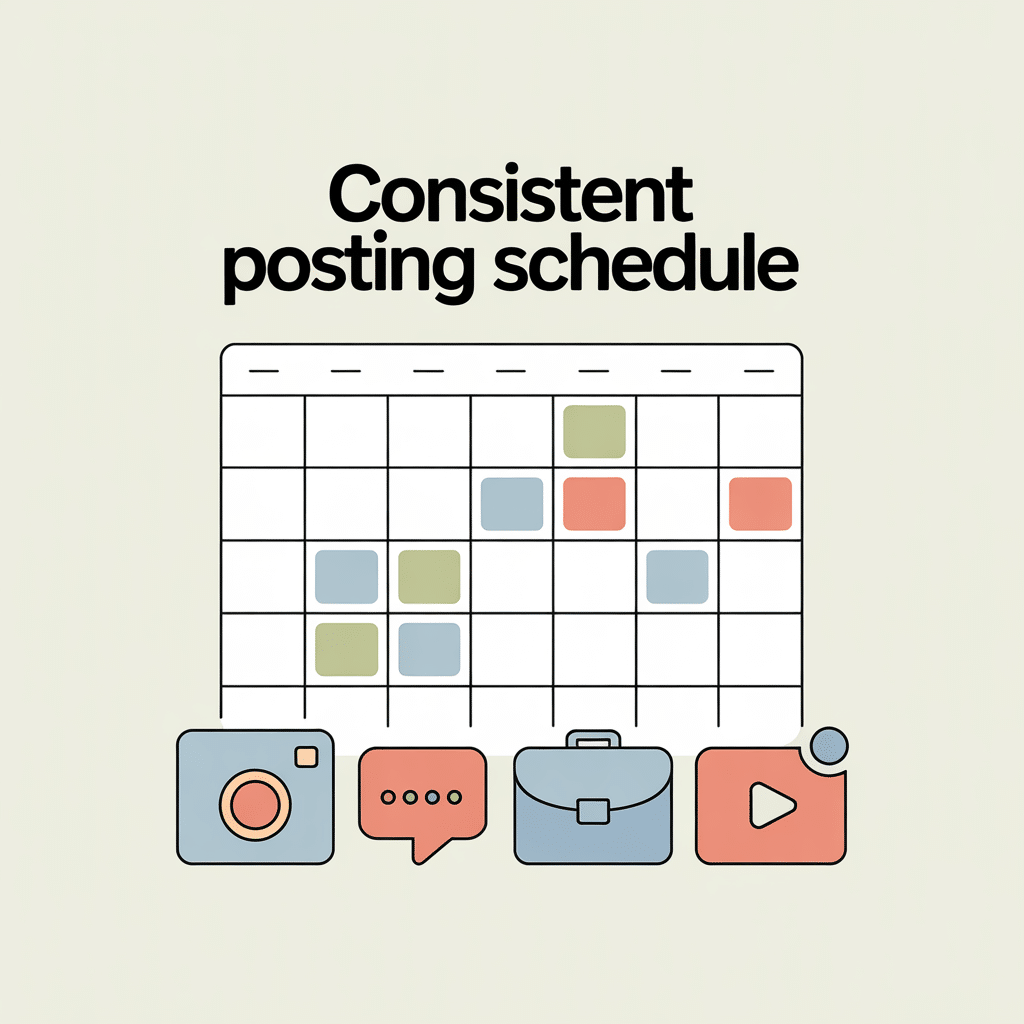
Build a platform-specific content calendar that reflects realistic frequencies—Facebook 1–2/day, Instagram 3–5 feed posts/week plus 1–2 Stories/day, LinkedIn 1–2/day, and TikTok 3–5 videos/week. Social media algorithms favor regularly posting accounts, so maintaining a consistent schedule can boost visibility. Use automation to schedule across time zones and keep quality high, prioritizing trust signals over vanity metrics.
Set weekly performance checkpoints to review Share of Algorithmic Shelf, Speed-to-Action, and Community Gravity, then adjust next week’s slots accordingly. Consistently prompting and responding to reviews can elevate engagement and search performance, as a higher volume of reviews correlates with better CTR and rankings.
Platform-Specific Content Calendar
Cadence is your engine: set a platform-specific content calendar that ties every post to a measurable goal and the audience that lives on each channel. Consistent timing boosts visibility by signaling regularity to platform algorithms.
Start by mapping objectives—engagement, clicks, or leads—to the channels where your community already gathers. Choose TikTok for teens, LinkedIn for industry peers, Instagram/Pinterest/Facebook for female audiences, and Twitter/X for younger male segments.
Adapt formats: short vertical videos on TikTok, polished visuals and hashtags on Instagram, longer captions on Facebook, brevity on X, and professional insights on LinkedIn.
Build 3–5 pillars so two-thirds educate or entertain and one-third promotes. Schedule during platform peak hours using a centralized, color-coded tool with approvals and CRM integration to stay cohesive.
Behind-the-scenes
Customer features
How-to guides
Local shout-outs
Weekly Performance Checkpoints
Metronome moments keep your posting rhythm steady: run weekly performance checkpoints to protect consistency and improve reach. Each week, review cadence, quality, and outcomes so your community sees you as reliable.
Aim for 3-5 posts—enough to hit growth thresholds without fatigue. Minimum two keeps disengagement at bay; beyond five on professional platforms often shows diminishing returns.
Check impressions by volume: 2-5 posts can add ~1,000 per post; 6-10 adds ~5,000; 11+ can yield 16,000+, but only if quality holds. Consistency improves algorithm favorability and builds brand trust, helping each post create more touchpoints for audience interaction.
Use analytics and scheduling tools to track what resonates, prevent gaps, and keep brand voice cohesive. Prioritize personally authored posts for up to 5× engagement.
Allocate 1-10 hours weekly, leverage Canva and AI to scale, and align content with campaign objectives to protect quality.
Keeping Brand Messaging Cohesive Across Channels
Although channels keep multiplying, your brand should sound and look the same wherever customers meet it. Consistency builds trust, speeds decisions, and signals you belong with your customers. When your voice and visuals stay aligned, recognition rises, sales cycles shrink by 22%, and recall beats trend-chasing by 37%. Inconsistent messaging causes confusion and revenue leakage—reported in 58% of cases—so you can’t leave coherence to chance.
To support this, ensure your content is optimized for natural language and intent so it appears consistently in conversational and voice search, as voice search is reshaping how audiences discover brands. Consistent messaging should also extend to how you handle customer feedback, since actively responding to reviews increases consumer trust and can boost local visibility across platforms.
Adopt a shared playbook: brand guidelines that define tone, visuals, and messaging hierarchy. Pair them with monthly PILOT tests to catch 82% of leaks early. Use AI content engines with human oversight to keep 95%+ compliance while boosting output by 68%. Fund consistency: follow the 60-40 rule and dedicate 22% to core assets.
Pillar
What to Do
Why it Matters
Guidelines
Document tone/visuals/hierarchy
Cuts misalignment 63%
PILOT Tests
Monthly experiments
Finds leaks early
AI + Review
Configure, then human-check
94% adherence
Audits
Quarterly cross-channel checks
Reduces risk 57%
Completing Google Business Profile Optimization in Two Weeks
Claim or create your profile within 48 hours using the fastest verification available. Choose a precise primary category (like “Italian Restaurant”), add up to nine accurate secondary categories, and use your exact legal business name. Keep NAP details consistent everywhere. Connect a mobile-optimized site, confirm responsiveness, and add a properly formatted, trackable phone number. Optimized profiles appear prominently in search results and Maps, helping drive local traffic to your business.
Complete core info in three days: hours, holiday schedules, service areas, and a concise, keyword-smart 750‑character description. Upload at least 10 high-quality, geo-tagged photos, plus a branded logo and cover. Add inclusive attributes to help people find their community with you. Queue 7–10 Google Posts across two weeks.
Respond to all existing reviews within 48 hours.
Launch a system to earn 5–10 authentic reviews.
Enable messaging with instant auto-replies.
Activate and answer common Questions & Answers.
Monitor daily and review Insights after 14 days.
Building Consistent Local Citations at Scale
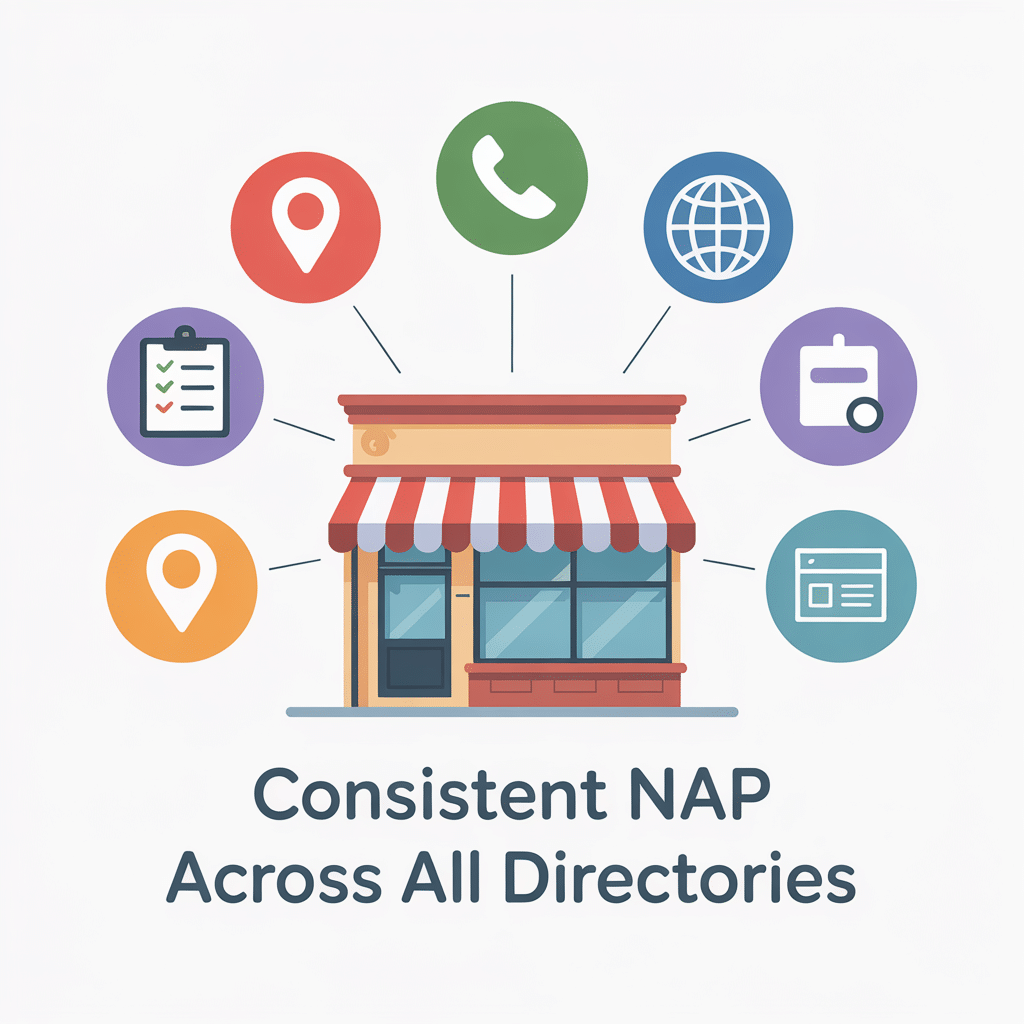
To scale citations, you first lock down NAP consistency across every listing—exact same name, address, and phone, plus complete hours and categories. Accurate listings are crucial for consumer trust and visibility. Consistent NAP and complete profiles also help search engines understand local relevance, improving visibility in local searches.
Then pick high-quality directories using clear criteria: trusted aggregators (Data Axle, Foursquare, Localeze), niche and local authority sites, and platforms that support photos and reviews.
Finally, use automation for distribution and set up ongoing monitoring and audits to catch duplicates, fix inconsistencies, and track changes.
NAP Consistency Essentials
Although it looks simple, NAP consistency—keeping your business name, address, and phone number identical everywhere—anchors your local SEO and reputation.
Search engines validate your legitimacy by matching NAP across structured citations (like Yelp) and unstructured mentions (blogs, news). Consistent NAP across directories strengthens local relevance and credibility, improving visibility and trust.
Even tiny variations—“Inc.” or missing suite numbers—confuse algorithms and neighbors looking for you.
Create a master NAP format and stick to it everywhere: Google Business Profile, Apple Maps, social profiles, and review sites. Audit monthly, update immediately after any change, and correct high-authority listings first.
Standardize punctuation, abbreviations, and phone format
Include suite numbers consistently
Align Google Maps with every listing
Track and fix unstructured mentions
Directory Selection Criteria
With your NAP locked, the next lever is where you place it. Choose directories with clear editorial policies, active review processes, and spam-free standards—these protect your brand and signal credibility. Niche directories can be especially effective because they offer targeted audience engagement and typically face less competition, helping your listings gain traction faster.
Prioritize logical categories so your community finds you fast. Favor established, high-authority platforms that rank top 10 for relevant searches; they lift visibility and SEO.
Select types by intent and projected CTR: industry-specific (3.5% to 4.8%), AI-enhanced (3.8% to 5.2%), premium business (2.7% to 3.4%), and strong local geo directories (2.3% to 3.1%). Skip free general lists (0.5% to 0.7%).
Validate trust: business verification, fresh updates, security, transparent ownership, and “best [industry] directory” rankings.
Seek value adds: precise filters, reviews, analytics, community features, mobile optimization, tool integrations, and AI personalization/predictive matching.
Automation and Monitoring
Because manual citation work doesn’t scale, automation and monitoring keep your NAP consistent everywhere while you focus on customers. Integrated platforms reduce tool fatigue and improve data accuracy, helping you prove ROI and scale efficiently.
Use tools that track rankings across zip codes and up to 225 geo points to spot gaps, then push accurate data to 70+ directories in real time. Automated alerts flag discrepancies before they cost you local pack visibility.
Prioritize verified, authoritative platforms to lift conversions and “near me” presence.
Automated builders sort high‑impact directories and flag those with direct submissions
Bulk edits sync multi‑location updates; scheduled systems maintain accuracy
Rank tracking by coordinates exposes neighborhoods where you can win
Choose pricing that fits your footprint—from $33–$149 monthly finders to enterprise tiers.
Maintain audits, correct outdated info fast, and keep everyone discovering you.
Creating Location-Specific Landing Pages for Local Relevance
Done right, location-specific landing pages turn each storefront into its own high-performing SEO and conversion asset. You’ll give every neighborhood its own stage: unique copy, services actually offered at that branch, and city, district, and regional keywords that match local intent. Add authenticity by aligning page details with your Google Business Profile and regularly updating recommended attributes to enhance credibility and local search visibility.
Feature recognizable landmarks in imagery to signal “you’re in the right place,” and solve navigation fast with accurate NAP matching your Google Business Profile. Unique landing pages enhance local search engine visibility for each premise by aligning with Google’s local ranking factors of relevance, distance, and prominence.
Build each page as an AI-readable source: LocalBusiness schema, precise service areas, and keywords in titles, headers, and meta descriptions. Proper technical setup helps Google associate the page with the correct address, boosting both organic rankings and map pack visibility.
For multi-location operations, centralize data but localize execution. Internally link between locations, services, and nearby city pages—internal linking is a top ranking lever.
Dedicated location pages are the #1 local ranking factor, and city-relevant content ranks high too. When people search “[service] near me [city],” your page should feel like home.
Prioritizing Mobile-First Optimization for Local Search
Why prioritize mobile first? Because over 60% of Google searches happen on phones, and 76% of mobile queries look for nearby solutions. Over 75% of local searches convert into leads, reinforcing that mobile visibility directly impacts conversions.
You win trust when customers find you fast, read clear info, and take action in seconds. Speed matters—half of users abandon pages that load in over three seconds. Visibility matters too—92% choose from page one results, and “open now near me” searches surged 400%, signaling urgency you can serve. Building trust also depends on cultivating genuine feedback, since accumulating reviews strengthens credibility and drives both rankings and conversions.
Optimize your Google Business Profile (GBP). It drives 32% of local ranking factors, and complete, verified listings get 7x more clicks and 70% more store visits.
On mobile, most users call or text directly from results, so accurate hours, categories, and attributes help your neighbors choose you with confidence.
Compress images and use lazy loading to hit sub‑3s mobile speed
Use click‑to‑call/text buttons and visible “open now” info
Structure NAP data consistently across directories
Add mobile‑friendly photos, services, and Q&A in GBP
Tracking Local Pack and Map Performance Monthly
Each month, treat Local Pack and Google Maps like two distinct channels and measure them with discipline. Track rankings with a geo-grid around your location, compare mobile vs. desktop, and test logged-in vs. logged-out results. Separate monitoring for Local Pack and Maps keeps visibility honest across keywords and neighborhoods. With over 1 billion users relying on Google Maps monthly, prioritize consistent tracking to capture high-intent behavior and location-driven actions. Use automation to request and respond to reviews within 24 hours, leveraging AI-driven responses to boost engagement and maintain a consistent brand voice across locations.
Pull Google Business Profile Insights to segment calls, direction requests, and clicks by source. Attribute conversions to each platform so you know which one drives qualified leads and revenue. Correlate popular times and Local Pack presence with spikes in performance. Benchmark competitors’ positions, categories, reviews, and proximity to understand why they outrank you—and where your community can win.
Use a shared dashboard and alerts to spot anomalies fast and celebrate progress together.
Metric Focus
Monthly Action
Geo-grid ranks
Map radius tiers; compare Pack vs. Maps
Engagement
Segment calls, clicks, directions by source
Conversions
Attribute leads/revenue to platform/keyword
Reviews
Track velocity, sentiment; respond within 24h
Publishing Customer-Question–Driven Blog Content
What if your blog answered the exact questions customers ask before they buy? You’d earn trust, rank, and conversions. Content marketing costs less than traditional outbound and generates more leads, so this approach delivers efficient growth. Positive reviews can enhance credibility and conversions, so weave voice-of-customer insights into posts and highlight review marketing wins to build trust.
Prioritize low-volume, high-intent queries over vanity traffic. Terms like “SOC 2 compliant CRM for healthcare” may show only 40 searches, but they attract evaluators ready to decide.
Create posts such as “HIPAA + SOC 2 CRM: Compliance Needs” to solve specific pain points. Pull topics from Reddit, Quora, and community threads—buyers trust real user experiences, and these discussions now surface in AI Overviews.
Use educational how-tos and step-by-step guides; they’re the most successful formats and get shared more. Personalize by role, account, and behavior so every reader feels seen. This approach compounds organic traffic and closes more leads than outbound.
Map questions by funnel stage and buyer role
Source unmet questions from community platforms
Write long-form guides with original research and clear next steps
Build clustered posts for each niche problem and intent signal
Building Community Trust Through Local Partnerships and Events
Though ads can spark awareness, community partnerships and local events build the trust that sustains it. When you show up for your neighbors, they show up for you. Sponsor festivals, youth sports, or clean‑ups—local sponsorships drive 41% higher recall and 3x more social engagement. List those partnerships on your Google Business Profile to earn more “frequent visitor” fans. Train in‑store staff to share your story with local reporters and bloggers; positive coverage rises 34%, and hyperlocal publisher ties lift trust scores 22%. Consumers increasingly make decisions based on online sentiment, with local reviews influencing 91% of people’s views on brands—so connect offline and then encourage happy attendees to leave reviews to amplify trust. Google's algorithm favors the recency of reviews, so prompting attendees to share feedback soon after events can improve local search visibility.
Use tech to deepen connection: QR codes to impact stories, NFC signage for videos, and event check‑ins that trigger warm follow‑ups. These activations boost recall 41% and return visits 24%. Align budget where belonging grows—community content and offline‑online synergy deliver a 5:1 ROI.
Move
Why it matters
Quick metric
Sponsor local events
Belonging with visibility
+17% positive reviews
List sponsors on GBP
Signal community roots
+28% frequent visitors
Pitch hyperlocal media
Earned trust
+19% placements
Partner with influencers
Neighbor credibility
4.2x conversions
Add QR/NFC at events
Seamless storytelling
+39% engagement
Conclusion
You’re ready to own your reputation in 2026. With real-time monitoring, 24-hour review responses, clean NAP data, and weekly GBP audits, you’ll stay visible and trusted. SMS prompts will grow reviews, while videos and SEO content turn attention into action. Local partnerships deepen community roots, and crisis protocols keep you steady. Imagine this: businesses with 5-star averages earn 28% more revenue—each review is a brick in your brand’s foundation. Start today, and watch your momentum compound.
Share This Post On Social Media
Learn How AI Affects Local Businesses And Stay Ahead Of Your Competitors!
Enter Your Email Below For Our Weekly Insider Updates And Tips
If you've found yourself looking on how to increase the number of Google reviews for your business, you've come to the right place. This guide will show you how to get more Google Reviews and delve into the nitty-gritty of strategies that will help your business organically grow its Google reviews. We will explore a […]
Unlock 2026’s smartest agency tools for Google reviews—automation, accuracy, and control without margin pain—discover which platforms actually deliver before competitors do.
Embarking on the journey of managing Google Reviews can seem daunting for a beginner in 2024—but fear not! In this beginner’s guide to Google Reviews, you’ll be armed with everything you need to claim your Google Business Profile, gather impactful reviews, and navigate customer feedback like a pro. Whether it’s your first step into the […]
The absence of location-specific reviews can result in a loss of sales and recommendations, directing potential customers towards your competitors. Learn how to outperform your rivals by following five straightforward steps to increase location reviews. From our research, a staggering 93% of consumers have made a buying decision based on an online review. Failing to […]