
Boost your business visibility with local SEO; discover how Reviewly.ai can revolutionize your strategy. Learn more about why local SEO is important.

Your online reputation can make or break your business. A single string of negative reviews or a damaging search result can cost you thousands in lost revenue — which is exactly why reputation management has become a must-have investment for businesses of all sizes. But with pricing that ranges from a few hundred dollars a month to tens of thousands, it's hard to know what's fair and what's just overpriced fluff.
In this guide, we'll break down real reputation management pricing in 2026 so you can budget wisely, avoid overpaying, and choose a solution that actually moves the needle for your business.
Reputation management is the practice of monitoring, influencing, and improving how your business is perceived online. This includes managing your Google reviews, responding to customer feedback, suppressing negative search results, and building a positive digital footprint across the platforms that matter most.
Whether you're a local service provider, a multi-location franchise, or an enterprise brand, reputation management touches every part of your customer acquisition funnel — from first impressions in search results to the moment a prospect reads your latest review.
If you've shopped around for reputation management services, you've probably noticed that quotes range wildly. One agency might charge $300 a month while another asks for $10,000+. That's because reputation management pricing depends on several core factors:
A single-location business will pay significantly less than a brand managing reviews across 50 or 100 locations. Multi-location review management requires more sophisticated tools and dedicated oversight, which naturally increases cost.

Basic review monitoring costs far less than a full-scale reputation strategy that includes review generation, sentiment analysis, SEO content creation, negative content suppression, and social media management. The wider the scope, the higher the price tag.
If you're starting from a healthy baseline, maintenance-level reputation management is affordable. But if you're in crisis mode — dealing with viral negative press, a flood of one-star reviews, or defamatory content in search results — expect to pay a premium for aggressive repair work.
There's a big difference between subscribing to a reputation management software platform and hiring an agency to do everything for you. Software-only solutions like Reviewly.ai are significantly more cost-effective, while full-service agencies charge for the hands-on labor of managing your reputation day-to-day.
Here's what you can realistically expect to pay for reputation management in 2026, broken out by service tier:
At the entry level, reputation management software gives you the tools to monitor reviews, send automated review requests, and track sentiment — all without hiring an agency. Platforms in this range are ideal for small businesses and solo operators who want to stay on top of their online reputation without a massive monthly commitment.
For example, Reviewly.ai's pricing gives businesses access to AI-powered review monitoring, automated responses, and review generation at a fraction of what a full-service agency would charge.

This is the sweet spot for most small-to-midsize businesses. At this tier, you typically get a dedicated account manager, active review response management, review generation campaigns, basic SEO work to boost positive content, and regular reporting.
Agencies in this range handle the heavy lifting so you can focus on running your business.
When your reputation issues go beyond reviews — think negative news articles, defamatory blog posts, or damaging search results — you'll need an advanced online reputation management (ORM) campaign. These services include content creation, SEO suppression strategies, PR outreach, and legal coordination in some cases.
Large enterprises and businesses facing full-blown reputation crises will find themselves in this bracket. Enterprise-level reputation management includes multi-platform monitoring, dedicated crisis response teams, executive reputation management, and ongoing PR strategies designed to protect your brand at scale.
Some agencies price their services by the hour rather than on a monthly retainer. In 2026, reputation management hourly rates generally fall into three tiers. Smaller agencies and consultants typically charge between $100 and $135 per hour. Mid-tier agencies with more robust capabilities come in around $150 to $200 per hour. And elite firms handling complex crisis-level work may charge $400 to $500+ per hour.
While hourly billing can work for short-term projects or one-off consultations, most businesses get better value from a fixed monthly plan that keeps reputation management running consistently in the background.
Overpaying for reputation management is more common than you might think. Here are a few red flags to watch for:
Lack of transparency. If an agency can't clearly explain what you're paying for each month, that's a problem. You should know exactly what services are included, how performance is measured, and what results to expect.
No tangible results after 90 days. Reputation management isn't magic — it takes time. But after three months, you should see measurable improvements in review volume, average star rating, or search result positioning.
Paying agency prices for software-level work. If all your provider does is send review requests and monitor your Google listing, you don't need a $3,000/month agency. A review management platform can handle that for a fraction of the cost.
Long-term contracts with no exit clause. Reputable providers are confident enough in their results to offer flexible terms. Be cautious of anyone locking you into a 12-month agreement with no performance guarantees.
Choosing between software and an agency comes down to your specific situation. If your business has a generally positive reputation and you just need help generating more reviews, automating responses, and keeping tabs on customer sentiment, a software platform is the smarter investment. Tools like comprehensive review management platforms put you in control without the overhead of agency fees.
On the other hand, if you're dealing with a serious reputation problem — negative press, a backlog of unanswered complaints, or damaging content ranking in search results — an agency with ORM expertise is worth the premium. The key is matching the level of service to the actual severity of your situation.

When building your budget, start by assessing where your reputation stands today. Audit your Google reviews, search for your brand name, and take stock of what's showing up across the major review sites.
If your online presence looks relatively healthy, a software subscription in the $50 to $300/month range may be all you need. If you spot some concerning trends — declining ratings, unanswered negative reviews, or unfavorable search results — consider stepping up to a managed service in the $500 to $3,000 range.
And if you're in crisis? Don't cut corners. Invest in professional help now to prevent long-term revenue loss that will far exceed the monthly cost of reputation repair.
It's easy to look at reputation management pricing and wonder if it's worth the spend. But consider the alternative. Studies consistently show that businesses with higher star ratings earn significantly more revenue. A one-star increase on Google can boost revenue by 5% to 9% according to Harvard Business Review research. And according to BrightLocal's 2026 Local Consumer Review Survey, 97% of consumers now read reviews before choosing a local business.
When you frame reputation management as customer acquisition cost rather than an overhead expense, the math almost always works out in your favor — especially when you choose the right solution for your needs.
Whether you go with software, an agency, or a hybrid approach, here are the non-negotiables to look for:
Review monitoring and alerts. You need real-time notifications when new reviews come in so you can respond quickly. Google's own review management guidelines emphasize the importance of timely, professional responses.
Review generation tools. The best defense is a strong offense. Look for tools that make it easy to generate more Google reviews from happy customers.
AI-powered response assistance. Responding to every review manually isn't scalable. AI tools that help draft thoughtful responses save hours of work every week.
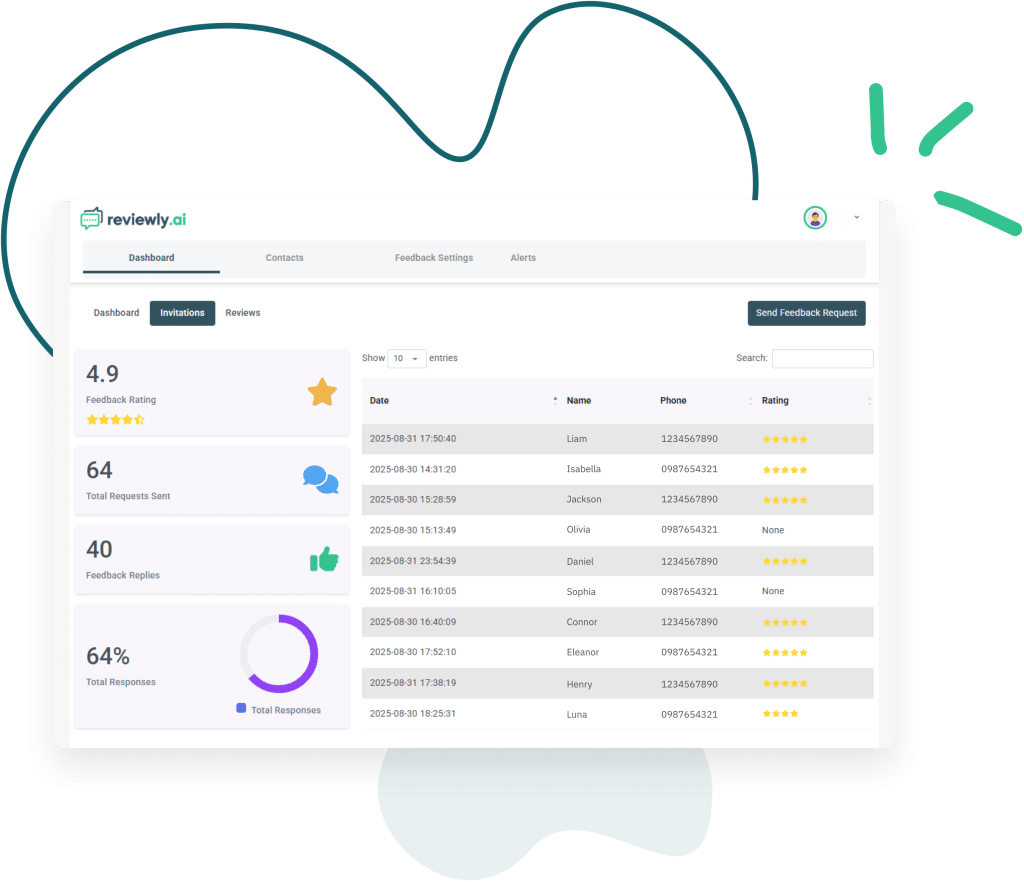
Sentiment analysis. Understanding the themes and trends behind your reviews helps you fix root-cause issues, not just manage symptoms. Sentiment analysis tools turn raw feedback into actionable intelligence.
Transparent reporting. You should always know what your investment is producing. Insist on clear dashboards and regular reports that tie reputation metrics to business outcomes.
Reputation management pricing in 2026 spans a wide range, from under $100/month for basic software to $25,000+ for enterprise-level crisis management. The right investment depends on where your reputation stands, how many locations you operate, and what level of service you actually need.
For most businesses, the smartest move is starting with a powerful software platform that automates the fundamentals — review monitoring, review generation, and AI-assisted responses — and only scaling up to agency-level services if the situation demands it.
If you're ready to take control of your online reputation without breaking the bank, Reviewly.ai offers an affordable, AI-powered solution built to help businesses of every size protect and grow their reputation. Check out our pricing plans to find the right fit for your business.
Jeff Schwerdt is the Founder & CEO of Reviewly.ai, a review management platform that helps businesses turn customer feedback into measurable growth. With over 10 years of experience in online reputation management, Jeff works with small and mid-sized businesses to build trust, improve local search visibility, and drive more revenue through smarter review strategies.

Boost your business visibility with local SEO; discover how Reviewly.ai can revolutionize your strategy. Learn more about why local SEO is important.
Optimize your business revenue with white label tools and discover strategies to maximize growth—your income potential is just a click away.
Did you know that 82% of consumers trust online reviews as much as personal recommendations? This is why positive Google reviews can be a game-changer for your business. We're about to explore the ultimate guide to securing these valuable testimonials. But this isn't just about getting any reviews; it's about getting the best ones. Why […]
Boosting Sales and Customer Reviews with Reviewly.ai: A Case Study of a Food Truck Business A newly established food truck business aimed to boost its sales and increase customer reviews. By leveraging Reviewly.ai's Yes Method, the business gathered food truck reviews. This facilitated and secured its first sale, subsequently seeing a significant rise in customer […]
Transform your agency's reputation with Reviewly.Ai's white label solution—discover customizable branding, private hosting, and advanced automation tools today.
Online reviews are crucial. They influence consumer decisions, impact search engine rankings, and shape your business's reputation. Motivating employees to ask for more reviews can significantly boost your company’s online presence and credibility. However, inspiring your staff to request reviews requires a strategic approach. This guide provides actionable insights on how to use Reviewly.ai to […]