
Strategically manage social media backlash with this guide, turning crises into opportunities and ensuring your audience feels heard and valued.
If Yext no longer fits your budget, workflow, or growth plans, you’re not alone.
In 2026, more businesses are moving away from all-in-one listing platforms and toward tools that actually drive what matters: more reviews, faster responses, and better visibility on Google.
The challenge isn’t finding alternatives—it’s choosing one that improves results without adding complexity.
Some platforms focus on listings. Others focus on messaging. A few are built specifically to generate and manage reviews at scale.
This guide breaks down the best Yext alternatives based on what actually matters today—review generation, automation, multi-location management, and ROI.
Although Yext still works for many enterprise brands, more businesses are switching in 2026 because the platform’s cost, complexity, and control tradeoffs no longer fit modern review-management needs.
If you’re budget-conscious, high starting prices, annual contracts, add-on fees, and per-location licensing can make growth feel punishing instead of empowering.
When you’re paying for bundled features your team rarely uses, ROI gets harder to justify. Since online reviews influence 93% of consumer buying decisions, businesses increasingly want platforms that make reputation management more efficient and measurable.
You may also feel the strain in day-to-day work. Long onboarding cycles, steep learning curves, and clunky mobile experiences can keep local managers and field teams from participating confidently.
Platforms that provide centralized review monitoring often make it easier to track customer sentiment and respond before issues escalate.
If adoption stalls, you don’t get the full value you were promised.
Control matters, too. When listings can revert after cancellation, you’re not just buying software—you’re accepting dependence.
At the same time, limited flexibility for franchise edits, mixed-brand structures, and modern messaging workflows can leave your team feeling boxed in when you want faster, more connected customer conversations.
Most Yext alternatives look similar at first glance. Nearly every platform promises review monitoring, listings management, and automation. But the real differences show up in how the software performs day to day—how easy it is to use, how well it fits your workflow, and whether it actually helps you generate more reviews.
Start with review coverage, but focus on what actually impacts your business. Google should always be the priority, since it drives the majority of local search decisions. Facebook and Yelp also matter, depending on your industry. While some platforms promote hundreds of directory integrations, those additional sources often have minimal impact compared to consistently generating and managing Google reviews.
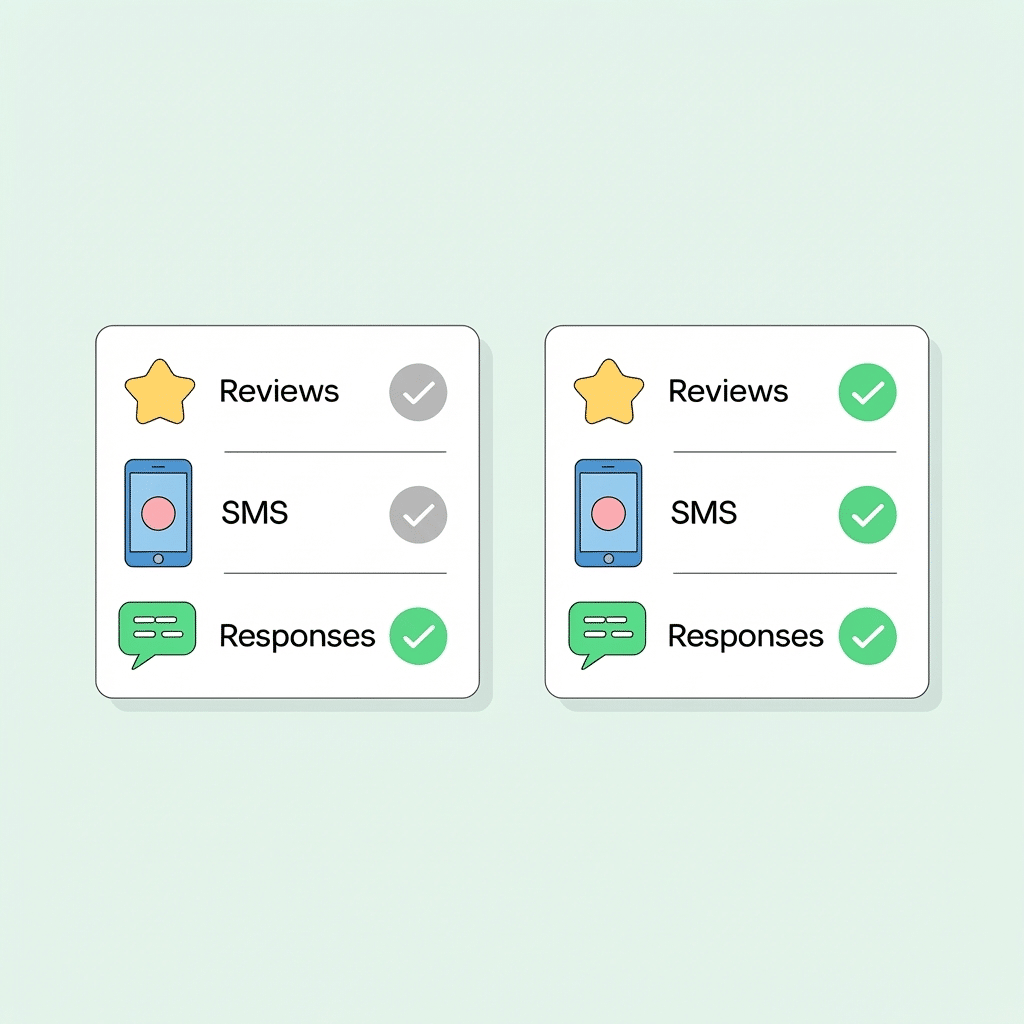
Next, evaluate how the platform handles review generation. This is where many tools separate themselves. The most effective platforms support SMS review requests, QR codes, and direct review links that take customers straight to the review form.
The goal is to reduce friction as much as possible. If customers have to search for your business or go through multiple steps, completion rates drop significantly.
Response workflows are just as important. Look for platforms that allow you to manage all reviews from a centralized inbox, use templates for consistency, and leverage AI-generated suggestions to speed up replies.
For multi-location businesses or agencies, approval flows and user permissions also become critical to maintaining quality and brand consistency.
Pricing is where many businesses run into problems. A platform might look affordable at first, but costs can increase quickly once you factor in per-location pricing, SMS usage fees, reporting add-ons, or API access. It’s important to understand the full cost structure upfront, especially if you plan to scale.
Finally, consider scalability. If your business is growing, your software needs to grow with you. Look for features like multi-location dashboards, automation that reduces manual work, and integrations with CRMs or booking systems that trigger review requests automatically.
Several Yext alternatives stand out in 2026, but most of them are designed primarily for enterprise organizations or large, multi-location brands with more complex operational needs.
These platforms typically focus on managing large volumes of listings, compliance requirements, and structured workflows across hundreds or thousands of locations. While they are powerful, they’re not always the best fit for smaller businesses or teams that simply want to generate more reviews and manage them efficiently.
Birdeye offers a broad all-in-one solution with strong integrations, multi-location support, and a wide feature set that appeals to larger organizations managing customer experience at scale.
Reputation.com is built specifically for enterprise companies that require advanced compliance controls, detailed analytics, and structured onboarding processes—especially in regulated industries like healthcare or finance.
Podium focuses heavily on SMS communication, helping businesses turn conversations into reviews and leads, though it is often structured around larger teams and higher-volume messaging workflows.
BrightLocal and Whitespark are more specialized toward local SEO and citation management, making them useful for agencies or businesses focused on improving listings and search visibility rather than building a full review generation system.
The common theme across these platforms is that they are built for scale and complexity. While that works well for enterprise environments, many businesses find they come with added cost, steeper learning curves, and features they may not fully use.
More importantly, many of these tools focus heavily on listings management or communication workflows—not on building a simple, consistent system for generating Google reviews.
If your main goal is to get more Google reviews and manage them efficiently, platforms built specifically for that purpose tend to perform better.

This is where Reviewly.ai stands out.
Instead of trying to do everything, Reviewly focuses on what actually drives results:
Businesses don’t need to manually send review links or track responses across multiple tools. The system automatically sends requests at the right time and allows teams to respond from one place.
For agencies and multi-location businesses, this becomes a major advantage.
You can:
Instead of adding complexity, it simplifies the entire review process.
If you run a small business, the best Yext alternative is usually the one that helps you get more Google Reviews without adding cost or admin work you can’t justify.
Look for free tiers or starter plans under $15 per month, month-to-month billing, and single-location pricing that scales only when you grow. Since Yext starts around $199 per month, many small businesses prefer a lower-cost option that fits tighter budgets.
You’ll get the most value from tools built around how local teams already work: SMS and email review requests, simple one- to three-step follow-ups, and easy links that send happy customers straight to review pages. Strategic timing and automated reminders can improve response rates and support customer engagement.
If you use Square, Toast, or Clover, prioritize platforms that trigger requests automatically after a sale.
Choose software your staff can learn fast. A clean inbox, mobile access, AI-drafted replies, and alerts for negative feedback help everyone stay on the same page.
Simple reports, rating trends, and competitor benchmarks make it easier to improve without needing an in-house marketing team.
Agencies need something completely different.
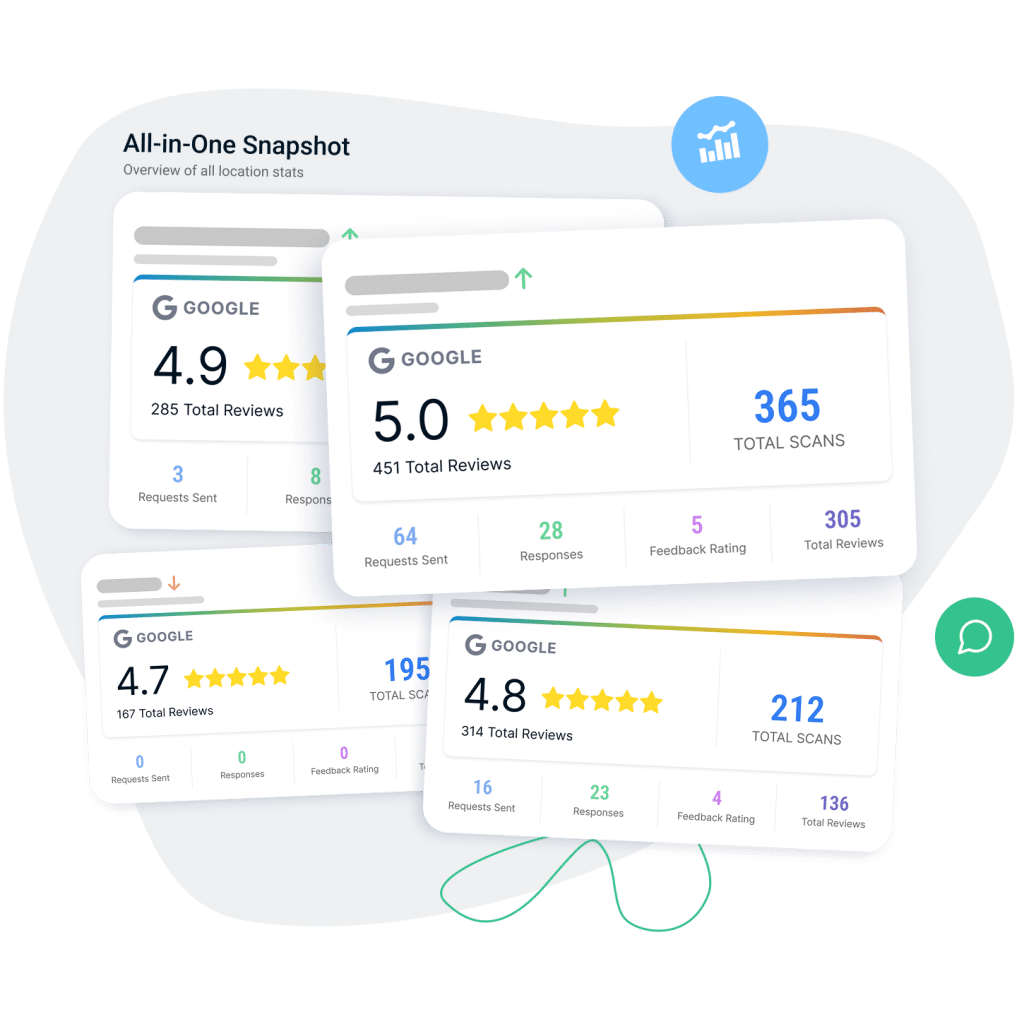
It’s not just about getting reviews—it’s about managing multiple clients at scale.
The right platform should allow you to:
This is where automation becomes critical.
With platforms like Reviewly.ai, agencies can:
That allows a small team to manage dozens—or even hundreds—of client locations without increasing workload.
More efficiency = higher margins.
SMS has become one of the most effective ways to generate reviews.
Platforms like Podium and Birdeye support SMS, but often bundle it into larger systems.
Reviewly.ai is built around it.
Instead of treating SMS as an add-on, it’s the core driver of review generation:
Because text messages are opened quickly, this creates a consistent flow of new reviews without relying on manual effort.
When you compare Yext alternatives by review-site coverage, the biggest gap usually isn’t Google or Facebook—those are standard—but how many secondary, regional, and industry-specific sources each platform can pull in.
If you want broad reach, BrightLocal stands out with 100+ sources, spanning Google, Yelp, TripAdvisor, Trustpilot, and niche directories that help your brand show up where your community already talks. Strong local SEO support also matters, because wider review coverage can improve local visibility and help customers discover your business across more search touchpoints. Birdeye also appeals to multi-location brands that want unified CX, combining listings, reviews, social, messaging, and surveys in one platform.
ReviewTrackers usually covers roughly 40–100 sources, depending on your plan and region, while platforms like ReviewSense often land in the 60–120 range.
Moz Local and Whitespark focus more tightly on core sites plus 20–60 local or category directories, which can still fit you well if local discovery matters most.
You’ll also want to check vertical coverage: healthcare tools may include Healthgrades or Zocdoc, restaurant-focused options may pull from OpenTable or Uber Eats, and global needs may require stronger regional support beyond the US.
Pricing varies significantly.
Most alternatives fall between:

Costs usually increase with:
This is why pricing models matter.
Platforms that automate review generation often provide better ROI because they directly impact:
Choosing the right platform comes down to one question:
What are you actually trying to improve?
If your goal is listings management, Yext or similar tools may still work.
But if your goal is:
then you need a platform built for that.
Look for:
The right tool should reduce work—not create more of it.
Choosing a Yext alternative in 2026 comes down to what you need most: stronger automation, better reporting, easier compliance, or more affordable pricing. If you compare platforms by your business size, review volume, and communication channels, you’ll find a better fit faster. Whether you want SMS power, agency-scale control, or simple small-business tools, the right platform can help you collect more reviews, respond faster, and grow visibility. Pick the tool that works as hard as you do.
Jeff Schwerdt is the Founder & CEO of Reviewly.ai, a review management platform that helps businesses turn customer feedback into measurable growth. With over 10 years of experience in online reputation management, Jeff works with small and mid-sized businesses to build trust, improve local search visibility, and drive more revenue through smarter review strategies.

Strategically manage social media backlash with this guide, turning crises into opportunities and ensuring your audience feels heard and valued.
You won't believe how reviews can skyrocket your SEO—discover how do reviews impact SEO the hidden benefits that can transform your online presence!
Quick Recap On What Are Google Reviews Google Reviews, comprised of consumer ratings and comments on Google, play a pivotal role for businesses. They influence a company's online standing and how visible they are in search results. Good reviews often elevate a brand's trustworthiness, draw in new clientele, and enhance their position in search engine […]
In today's digital landscape, online reviews have undergone a remarkable transformation. Once primarily serving as trust signals to help potential customers make decisions, reviews now play a crucial role in how artificial intelligence understands and represents your business in search results. This evolution has profound implications for businesses looking to maintain visibility in an AI-driven […]
Push your digital marketing agency's profitability to new heights with our efficient strategies and transformative agency model.
At Reviewly.ai, we're always seeking innovative ways to help businesses maximize their online presence. Our latest breakthrough? A game-changing approach called the 'STARS Method,' designed to boost Google Reviews and drive business success. In this blog post, we explore this unique strategy and how it can transform your Google Business Profile (GBP) into a beacon […]