While these platforms appear similar on the surface, they are built with very different priorities.
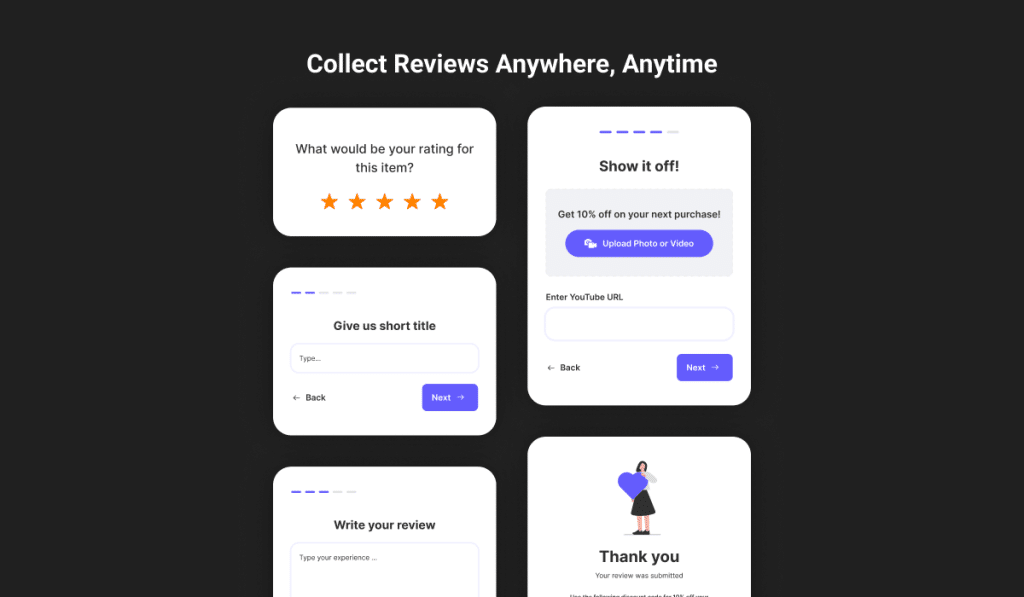
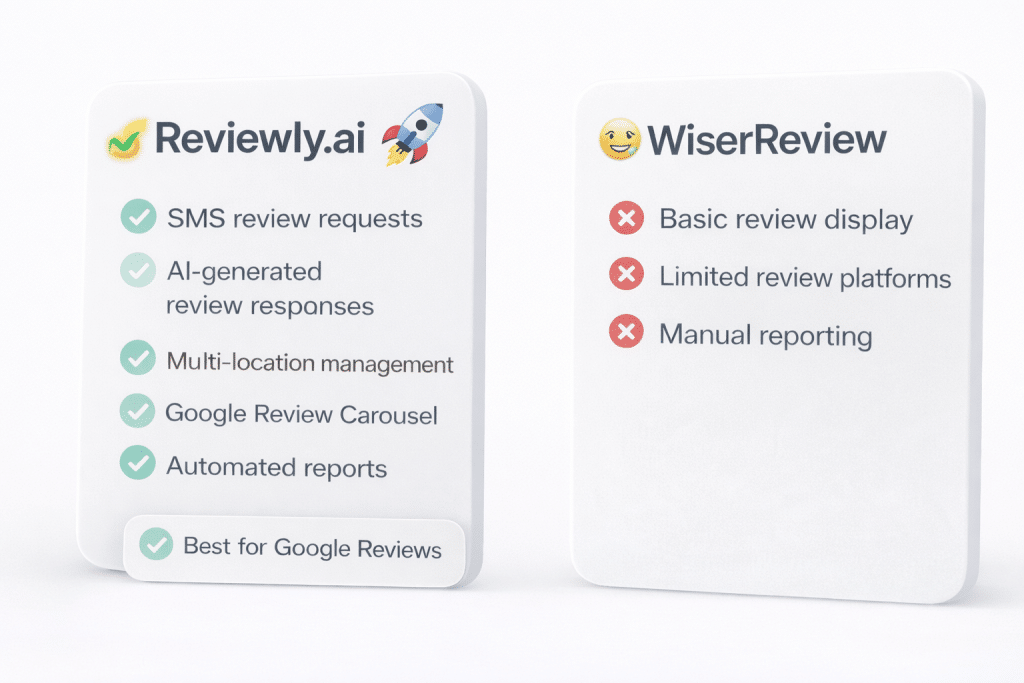
WiserNotify focuses primarily on social proof and on-site conversion notifications. WiserReviews is their review collection and display product. Reviewly.ai is purpose-built for SMS-driven Google review automation and local SEO growth.
This guide breaks down:
What each platform actually does
Where they overlap
Where they differ
Which one makes sense depending on your growth strategy
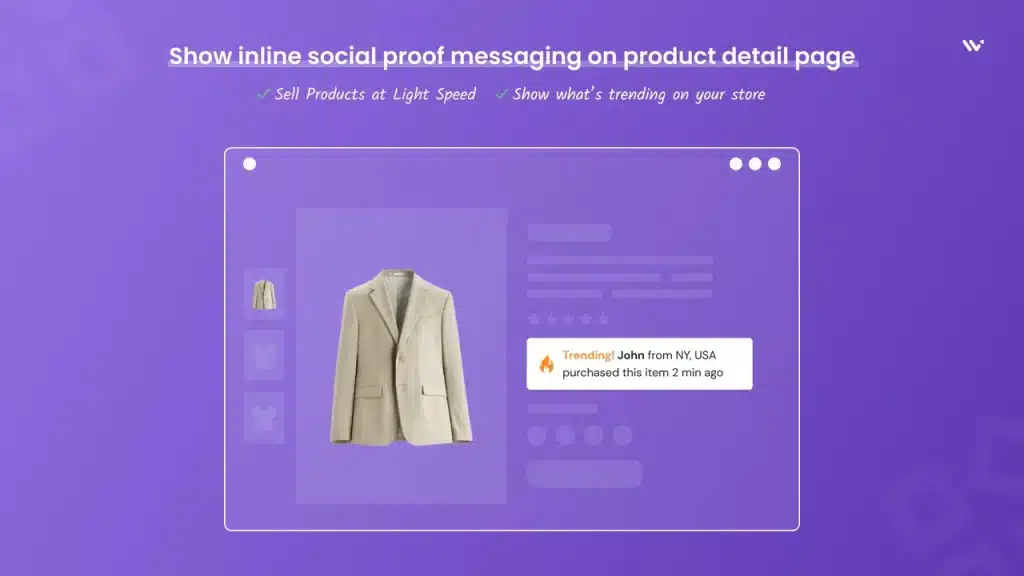
WiserNotify is a social proof notification platform designed to increase on-site conversions through behavioral psychology and urgency triggers.
Rather than focusing on review automation or Google Business Profile growth, WiserNotify operates at the website layer of your marketing funnel.
It allows businesses to display:
Recent purchases (“Sarah from Chicago just bought this”)
Signup alerts (“5 people joined in the last hour”)
Live visitor counts
Review snippets
On-site activity popups
Limited-time offers and urgency banners
These notifications typically appear as small popups in the corner of a website and are designed to create:
Urgency
FOMO (fear of missing out)
Trust through social validation
Increased conversion momentum
Its primary use case is conversion rate optimization (CRO) — meaning it aims to convert existing website visitors into customers at a higher percentage.
WiserNotify and WiserReviews are useful tools — particularly for website conversion optimization and review display.
If your goal is to:
Add social proof popups
Increase landing page conversions
Showcase testimonials on your website
Improve on-site trust signals
They can serve that purpose effectively.
But those outcomes are fundamentally different from growing Google reviews at scale.
They are not architected primarily around:
Driving Local Pack ranking improvements
Increasing review velocity
Automating SMS review outreach
Improving Google Business Profile performance
Scaling reputation management across multiple locations
And in today’s search environment, those distinctions matter.
If your growth strategy depends on:
Local SEO
Google visibility
Multi-location reputation
Consistent review generation
Timely, professional review responses
Then you need infrastructure built specifically for those objectives.
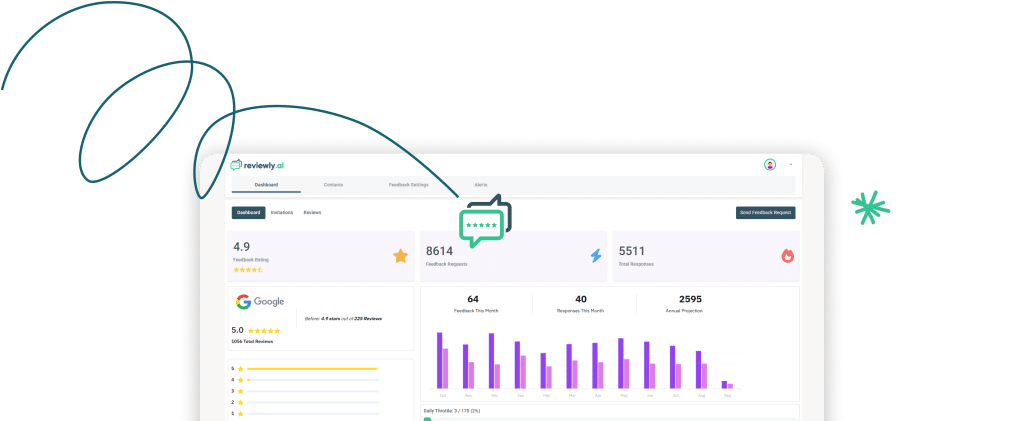
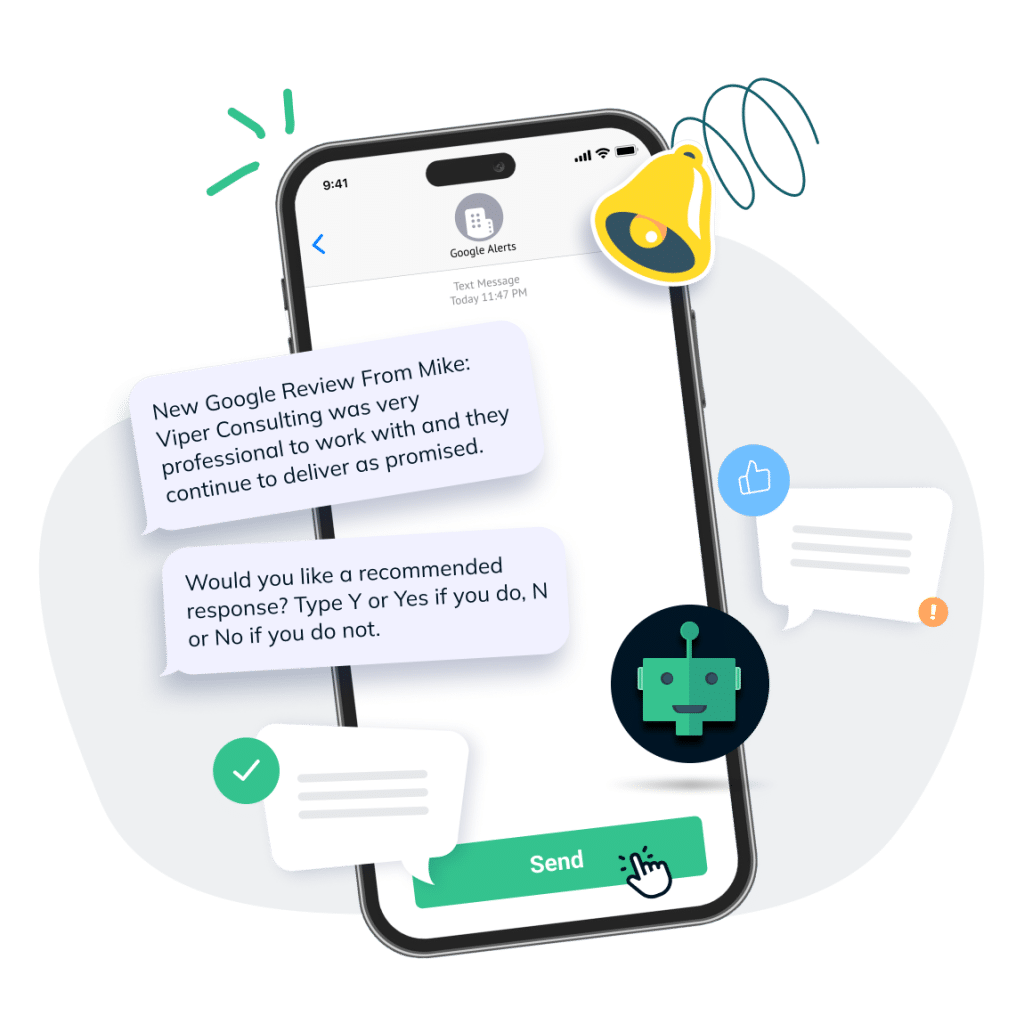
Reviewly.ai was designed with a Google-first philosophy — focusing on direct SMS outreach, automated review workflows, AI-assisted responses, and scalable multi-location management.
It is not a conversion widget.
It is not a testimonial display tool.
It is a reputation automation platform.
That difference shapes everything from architecture to feature design.
In 2026, reputation growth isn’t passive. It’s not something businesses “hope” happens through occasional review requests.
It’s systemized. It’s automated. It’s measurable. And it’s strategically tied to search visibility.
If your primary revenue driver comes from local discovery, search rankings, and Google trust signals, then choosing a platform built around those priorities is not just a feature decision — it’s a growth decision.
The question isn’t which platform is “better.”
It’s which platform is built for the outcome you actually need.
And for businesses serious about Google review growth and local SEO dominance, automation is no longer optional — it’s foundational.
Share This Post On Social Media
Learn How AI Affects Local Businesses And Stay Ahead Of Your Competitors!
Enter Your Email Below For Our Weekly Insider Updates And Tips
Google Reviews have emerged as key influencers in the dental industry sector. As we head deeper into 2024, their role in shaping the digital identity of dental clinics is expected to be more crucial than ever. In today’s scenario, where the majority of patients commence their search for a dental practice online, online reviews stand […]
Google reviews decide who’s found and trusted in 2025—discover the importance of google reviews and how to turn ratings into revenue before competitors outrank you.
In a world where time is limited and competition is fierce, white label services have become a strategic lifeline for agencies that want to scale fast without ballooning their costs. But what exactly does “white label” mean? At its core, white label refers to a product or service produced by one company and rebranded by […]